ROOTED HERE
The history of Charlottesville
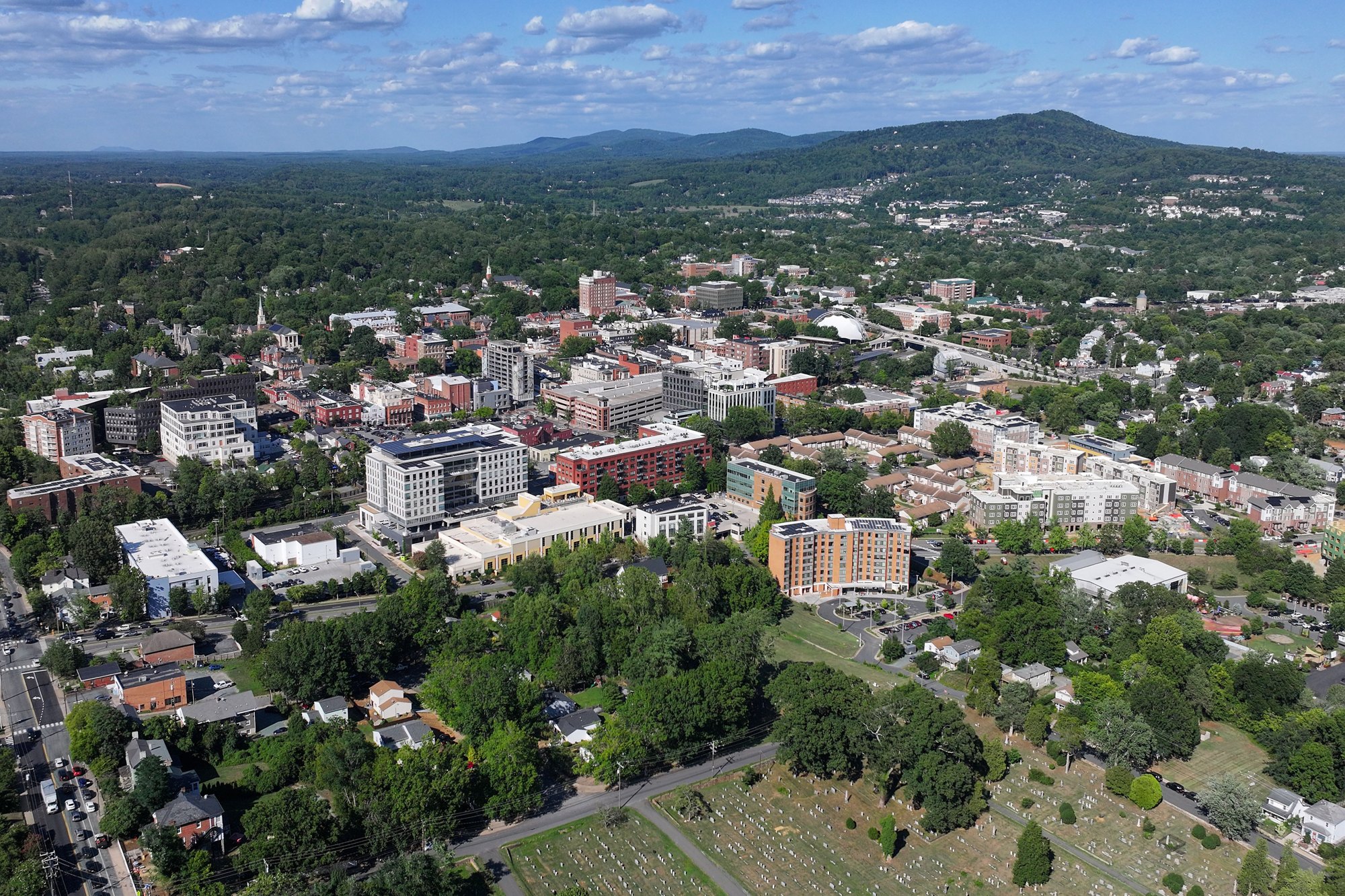
Charlottesville is an independent Virginia city surrounded by, but legally separate from, Albemarle County. The Downtown Mall and neighborhoods such as Fifeville, Ridge Street and Woolen Mills provide distinct places to explore.
People who shaped Charlottesville
These milestones are an introduction, not a complete local history. Follow the linked city and museum sources to explore the people and places behind them.Read the local historical account.
Watch the city’s history

FROM THE ARCHIVES
Charlottesville | VPM DOCUMENTARIES
A VPM documentary excerpt examines the events and historical context of August 2017 in Charlottesville. The publisher rates this program TV-MA.
Watch on YouTube ↗- Before the colonial city
Monacan homelands
Monacan people lived throughout the central Virginia Piedmont long before the colonial city. The nation remains in its ancestral homeland, preserving a history that extends far beyond Charlottesville’s later charter.
Monacan Indian Nation: Our History ↗ - 1762
A chartered town
Charlottesville received its colonial charter in 1762. The town was named for Charlotte of Mecklenburg-Strelitz, the queen consort of King George III.
City of Charlottesville: 2021 Comprehensive Plan ↗ - 1819
A university is chartered
The Virginia General Assembly chartered the University of Virginia in 1819. Founded by Thomas Jefferson, the institution became a defining presence in the city’s educational and built landscape.
University of Virginia ↗ - 1850
Rail transport reaches the city
The railway arrived in Charlottesville by 1850, carrying passengers and goods. New transportation connections helped support local commerce and linked the city with markets farther away.
Charlottesville Albemarle Convention & Visitors Bureau ↗ - 1888
City incorporation
Charlottesville incorporated as a city in 1888. It became an independent Virginia municipality, separate from the surrounding county government.
City of Charlottesville: 2021 Comprehensive Plan ↗ - 1960s
Vinegar Hill and displacement
Vinegar Hill grew into a thriving Black neighborhood after the Civil War. In the 1960s, urban renewal destroyed the community, displacing residents and businesses from a central part of the city.
Charlottesville Albemarle Convention & Visitors Bureau ↗
See the history for yourself.
Check current opening hours and visitor information before you go: The Paramount Theater.
For local services and public information, the local government website is a starting point. For historical research, consult local libraries, archives and museums and check collection-specific image permissions.
Selected milestones from the linked historical sources. This is an introduction, not a complete account of the city’s history.